
Common Hydraulic Fitting Types Buyers Should Know
HGW Hydraulics on Jan 12th 2021

Common hydraulic fitting types are not interchangeable just because the threads look close. A buyer usually has to identify the thread family, sealing method, body style, material, and installed location before ordering a replacement.
For HGW buyers, the clean starting point is the 11 product families in the HGW catalog: 37 degree JIC, NPT pipe, NPSM pipe swivel, SAE O-ring boss, flareless bite type, ORFS, Metric / DIN 2353, BSP / British Standard, flange adapters and plugs, hose barb adapters, and weld-on tube and hose adapters. Other fitting styles exist, but these are the practical categories to check first when matching a replacement to HGW's product structure.
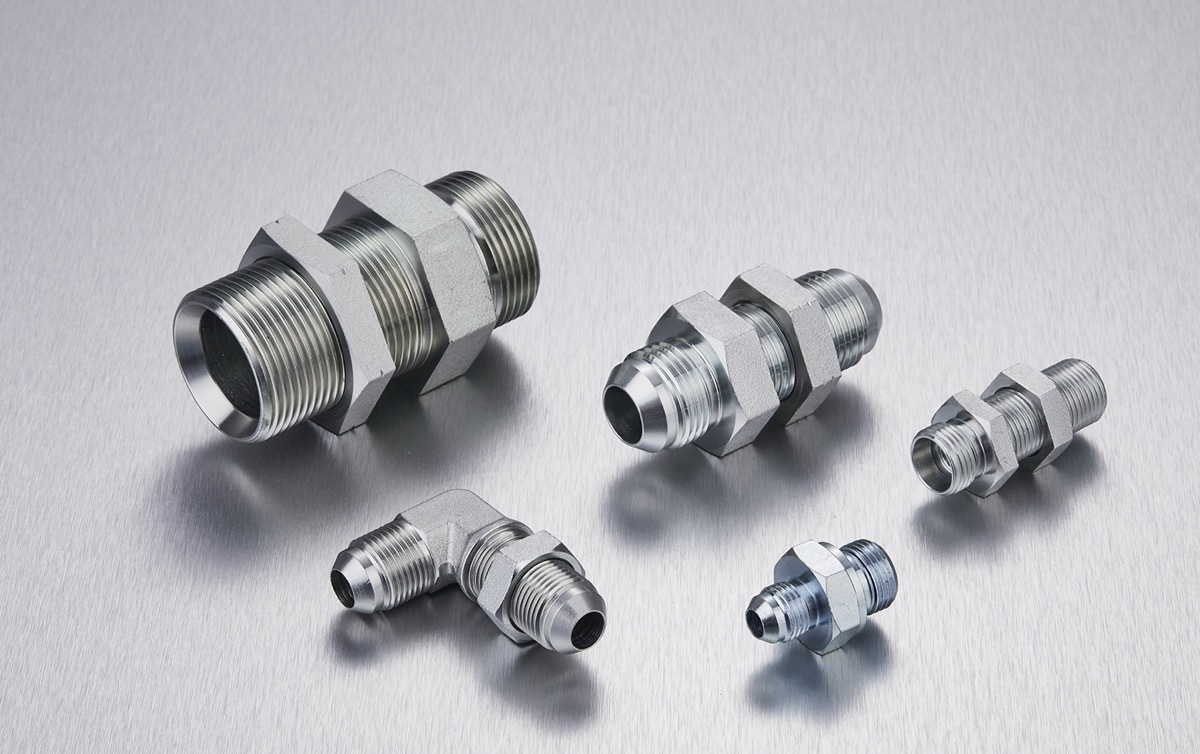
11 HGW fitting categories buyers should check before ordering
1. 37 degree JIC fittings
JIC fittings use straight threads and a 37 degree flare seat. The thread pulls the connection together, but the seal happens at the flare surface. That is why a JIC replacement has to match the flare angle and seat condition, not just the thread diameter.
37 degree JIC fittings are common in hydraulic hose assemblies, mobile equipment, agricultural machinery, construction equipment, and other fluid power work. Check the flare seat for scratches and compare straight, elbow, tee, swivel, and bulkhead body shapes before choosing the replacement.
2. NPT pipe fittings
NPT is the tapered pipe thread style many U.S. buyers see on construction, agricultural, industrial, plumbing, and service equipment. It uses a tapered thread to form a mechanical wedge, usually with the correct thread sealant practice.
Before ordering an NPT pipe fitting, confirm male or female thread, nominal pipe size, whether the mating port is truly NPT or NPTF, and whether the old connection used sealant. A pipe thread may start by hand even when the thread family is wrong.
3. NPSM pipe swivel adapters
NPSM pipe swivel adapters use straight pipe threads in a swivel connection. They are often checked near pipe-thread hydraulic work, but they should not be treated as the same seal as a tapered NPT connection.
When checking NPSM pipe swivel adapters, confirm the pipe size, swivel nut condition, seat or mating surface, and the connection on the opposite end. This matters when a hose route needs the swivel to align without twisting the assembly.
4. SAE O-ring boss fittings
SAE O-ring boss, often shortened to ORB, uses straight threads with an O-ring at the boss. The O-ring seals against the port, so the condition of the O-ring, port chamfer, spotface, and thread engagement all matter.
When choosing SAE O-ring boss fittings, do not substitute a pipe taper fitting just because the threads look similar. Confirm the SAE straight thread size, O-ring size, adjustable or non-adjustable body, and the installed angle needed for the hose route.
5. Flareless bite type tube fittings
Flareless bite type fittings use a nut and sleeve or ferrule to grip the tube without requiring a flared tube end. These are common in tube systems where tube preparation and sleeve condition are part of the seal.
For flareless bite type tube fittings, confirm tube outside diameter, light or heavy series where applicable, sleeve condition, and whether the opposite end converts to pipe, JIC, ORB, metric, or another connection. The tube must be cut and prepared correctly or the fitting can leak even if the part number is right.
6. ORFS fittings
O-ring face seal fittings use an O-ring on the flat face of the fitting. The seal is made at the face, which helps in applications where vibration, impulse, or repeated movement can make leaks expensive.
ORFS fittings are a good category to check when the old connection has a flat face and visible O-ring groove. Before ordering, inspect the O-ring groove, tube nut or sleeve, mating face, and whether the opposite end is JIC, ORB, pipe, BSP, metric, or another standard.
7. Metric / DIN 2353 fittings
Metric fittings are common on equipment built in Europe and Asia. Buyers may run into DIN 2353 tube fittings, metric O-ring ports, metric straight threads, and other regional standards that look close but seal differently.
When choosing Metric / DIN 2353 fittings, record thread diameter and pitch, tube outside diameter, seat angle, light or heavy series, and the OEM context. Metric, JIS, DIN, and Komatsu-style connections should not be grouped together as one generic metric fitting.
8. BSP fittings
BSP fittings use British Standard Pipe thread forms. BSPP has parallel threads and usually seals with an O-ring, bonded washer, or other sealing face. BSPT has tapered threads and may require the correct thread sealant practice. BSP thread angle is different from NPT, so the two should not be forced together.
When ordering BSP / British Standard fittings, identify BSPP versus BSPT first. Also check the seat angle, washer or O-ring style, thread size, and whether the mating component is British, Japanese, metric, or pipe-thread based.
9. Flange adapters and plugs
Hydraulic flange connections are often used where size, pressure, vibration, and service access make threaded fittings less practical. Buyers commonly need to separate SAE Code 61 from SAE Code 62. Similar four-bolt flange patterns are not automatically interchangeable, and some OEM flange styles differ in thickness or dimensions.
When checking flange adapters and plugs, confirm code, size, bolt pattern, flange face condition, O-ring or seal detail, and the connection on the other end. A Code 61 part should not be used as a guess for a Code 62 requirement.
10. Hose barb adapters
Hose barb adapters are used where the hose type, retention method, and pressure requirement match a barb-style connection. They should not be confused with high-pressure crimped hydraulic hose ends or quick pneumatic push-in fittings.
For hose barb adapters, confirm hose inside diameter, barb style, clamp or retention method, fluid compatibility, and whether the opposite end is pipe, JIC, ORB, BSP, metric, or another standard.
11. Weld fittings
Weld fittings are used when the connection is meant to become part of a permanent tube, pipe, manifold, or fabricated assembly. They are common where structural integrity, leak control, or a custom port location matters more than easy removal.
For weld-on tube and hose adapters, confirm the weld end, tube bore or pipe detail, material, downstream connection, pressure requirement, and the welding procedure. A welded fitting should be selected with the whole assembly in mind, not as a quick field guess.
How to choose the right family before buying
Start with the old part and the mating component. Identify both connection ends, then confirm the seal. The seal may be a tapered pipe thread, flare seat, O-ring boss, flat face O-ring, bonded washer, ferrule bite, flange face, barb connection, or weld end.
After the seal is clear, choose the body shape. A straight adapter, 45 degree elbow, 90 degree elbow, tee, cross, swivel, bulkhead, cap, plug, flange head, or weld adapter changes how the hose or tube routes through the machine. The wrong shape can make the line rub, twist, or bend too tightly.
What to send HGW for help
If you are not sure which family you have, send HGW a clear photo of the full fitting, close photos of both ends, thread measurements, thread pitch if available, the installed location, and any part numbers or stamping. Also note whether the connection is on a pump, valve, cylinder, manifold, hose assembly, tube line, service port, or mobile equipment frame.
That information helps narrow the fitting type before price and availability are checked. It also reduces the chance of buying a fitting that looks similar but seals in a completely different way.
Related HGW categories
- Full product catalog
- 37 degree JIC fittings
- NPT pipe fittings
- NPSM pipe swivel adapters
- SAE O-ring boss fittings
- ORFS fittings
- BSP / British Standard fittings
- Metric / DIN 2353 fittings
- Flange adapters and plugs
- Flareless bite-type tube fittings
- Hose barb adapters
- Weld-on tube and hose adapters
FAQ
What is the first thing to check on a hydraulic fitting?
Check how each end seals. Thread size matters, but the sealing method matters more. A tapered pipe thread, JIC flare, ORB O-ring, ORFS face seal, BSP washer, flareless sleeve, flange face, hose barb, and weld end are different connection systems.
Can I match a fitting from a photo?
A photo helps, but it is usually not enough by itself. Measure the thread, check the seat or O-ring location, record both ends, and compare the installed body shape before ordering.
Are JIC, ORB, ORFS, NPT, BSP, and metric fittings interchangeable?
No. They may be installed near each other on the same machine, but they use different threads, seats, O-rings, washers, ferrules, or flange faces. Treat each family separately.
Why does a new hydraulic fitting leak?
Common causes include the wrong thread family, wrong sealing method, damaged O-ring, scored flare seat, poor tube preparation, overtightening, missing washer, damaged port, or hose routing that pulls on the fitting after installation.