
Two Common Tube Fitting Types and How to Choose
HGW Hydraulics on Feb 4th 2021

Quick answer
Tube fittings are commonly grouped into instrumentation tube fittings and industrial tube fittings. Instrumentation fittings are usually chosen for measurement, control, sampling, gas, and process lines where leak control and material compatibility are critical. Industrial tube fittings are common on hydraulic equipment where tube routing, pressure, vibration, and serviceability drive the decision.
For HGW buyers, choose by tube outside diameter, tube wall, pressure, temperature, vibration, media, material, and the connection standard used on the machine. A tube fitting is not selected by appearance alone.
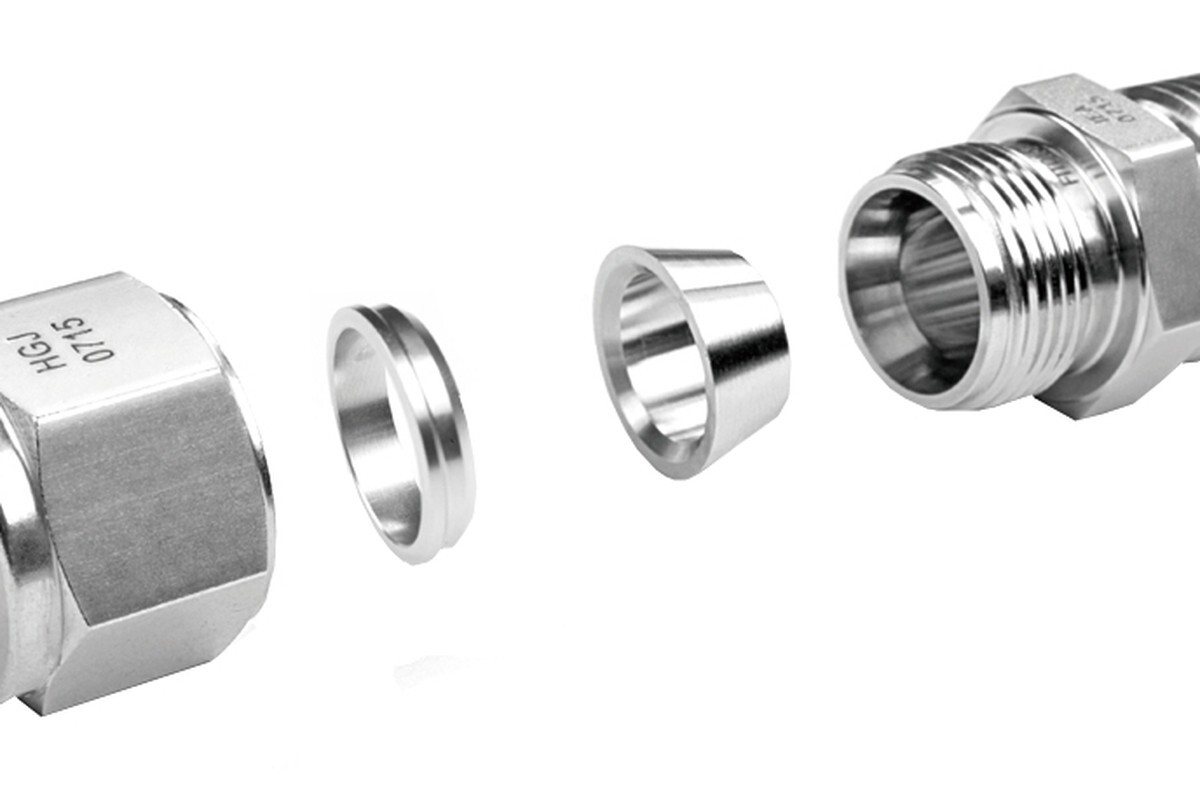
Instrumentation tube fittings
Instrumentation tube fittings often use single-ferrule or double-ferrule compression designs. The fitting body, nut, and ferrules grip the tube and create the seal as the nut is tightened. These fittings are used in systems that move gas or liquid through control, measurement, sampling, and process lines.
Common applications include chemical plants, oil and gas skids, power generation, laboratories, panels, instrument racks, and equipment where a small leak can create safety, quality, or downtime problems. Material selection matters because the tube and fitting may contact corrosive chemicals, high temperatures, outdoor exposure, or clean-process media.
Industrial tube fittings
Industrial hydraulic tube fittings include SAE 37 degree flared tube fittings, SAE flareless bite-type fittings, ORFS tube connections, and metric/DIN tube fittings. They are used where hydraulic tube carries pressure between pumps, valves, cylinders, manifolds, and machine sections.
Industrial tube fittings need to handle pressure and vibration while allowing equipment to be assembled and serviced. The choice depends on the tube preparation method, available tooling, pressure rating, machine standard, and whether the seal is created by a flare, bite sleeve, O-ring face, or other geometry.
Materials and finish
Common fitting materials include carbon steel, stainless steel, and brass. Carbon steel is common in many hydraulic applications when plating and environment are suitable. Stainless steel is used where corrosion resistance or cleanliness matters. Brass is common in lower-pressure utility and pneumatic-style service, but it is not automatically appropriate for high-pressure hydraulic systems.
The tube material should be compatible with the fitting material and the fluid. Mixing materials without considering corrosion, galvanic effects, or pressure requirements can shorten service life.
Selection checks before ordering
- Confirm tube outside diameter and wall thickness.
- Identify whether the connection is compression, bite type, flare, ORFS, metric/DIN, or another tube standard.
- Check pressure, temperature, vibration, and media compatibility.
- Confirm whether special tools are needed for flaring, presetting, or swaging.
- Match body shape and routing so the tube is not forced into stress after assembly.
When to ask for help
If the tube end is damaged, the ferrule is stuck, or the connection type is unclear, send HGW photos of the fitting body, nut, ferrule or sleeve, tube end, and installed location. Include tube OD, thread measurements, and any part numbers. That prevents confusing instrumentation compression fittings with industrial bite-type or flare connections.
Related HGW categories
FAQ
What are the two broad types of tube fittings?
The broad groups are instrumentation tube fittings and industrial tube fittings. Each group includes several specific connection styles.
What is the difference between tube fittings and pipe fittings?
Tube fittings are sized around tube outside diameter and a tube connection method. Pipe fittings are usually identified by pipe thread or nominal pipe size.
Can a compression fitting replace a bite-type hydraulic tube fitting?
Not automatically. The tube size, pressure, ferrule design, thread, body geometry, and equipment standard must match.